Turnkey Construction vs Labour Contract: Which Is Better for Your Home?
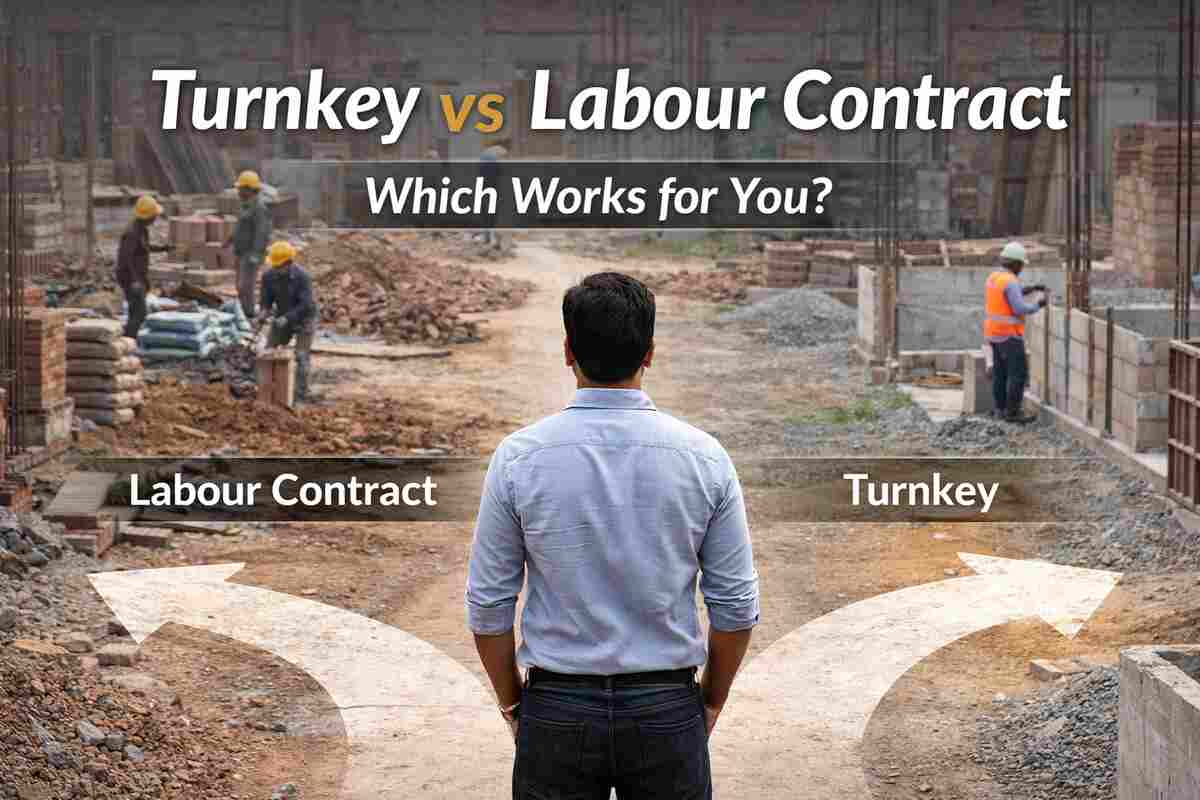
When planning to build a home, one of the first decisions you will face is this:
Should you go with turnkey construction, or manage it through a labour contract?
On the surface, the difference looks simple.
- Turnkey: One team handles everything
- Labour contract: You manage materials, contractor handles labour
But once construction begins, this choice starts to affect everything.
Your time.
Your involvement.
Your decisions.
And eventually, the outcome of your home.
It Is Not Just a Construction Decision
For most homeowners, this is not just about construction.
It is about how your life fits into the construction process.
Because building a home is not something that happens in isolation.
You may be:
- Working a full-time job
- Managing a business
- Taking care of family responsibilities
- Handling multiple commitments
And construction, whether planned or not, starts demanding your time.
What a Labour Contract Actually Feels Like
A labour contract gives you control.
You choose materials.
You decide vendors.
You manage purchases.
On paper, this sounds efficient.
In reality, it looks like this:
- Calls about steel delivery in the middle of your workday
- Decisions about tiles while you’re trying to manage office deadlines
- Following up with multiple vendors for different materials
- Being present on-site for clarifications
Some homeowners enjoy this involvement.
Especially if they:
- Have prior experience
- Have flexible schedules
- Prefer being hands-on with every detail
In such cases, a labour contract can work well.
But without time and involvement, the same flexibility can turn into pressure.
What Turnkey Construction Feels Like
Turnkey construction is often misunderstood as a “hands-off” option.
In reality, it is more about structured responsibility.
You are still involved in decisions.
But the difference is:
- Decisions are planned, not reactive
- Execution follows a defined process
- Coordination does not depend on you
- There is a single point of accountability
Instead of managing multiple moving parts, you are reviewing and approving.
For homeowners who:
- Have demanding work schedules
- Live away from the construction site
- Prefer clarity over day-to-day involvement
This structure makes a noticeable difference.
Where Most People Misjudge This Decision
A common assumption is:
“Labour contract will save money.”
Sometimes it does.
But only when:
- Decisions are made carefully
- Coordination is consistent
- Execution is monitored closely
In many cases, what happens instead is:
- Small cost increases across stages
- Rework due to miscommunication
- Delays that extend timelines
- Decisions taken in urgency rather than planning
These don’t always show up as one big cost.
They appear as multiple small gaps over time.
Turnkey, on the other hand, is not necessarily cheaper.
But it tends to be more predictable.
This Is Really About Your Time
At its core, this decision is not about construction models.
It is about:
How much time and attention you can realistically give.
If you are someone who:
- Can visit the site regularly
- Can coordinate with vendors
- Can follow up on materials and execution
Then a labour contract can work.
But if your days already look like:
- Office work
- Meetings
- Family responsibilities
- Limited free time
Then construction can quickly become overwhelming.
And that’s when structure starts to matter more than control.
Control vs Responsibility
Control sounds appealing.
But control also means:
- You are responsible for coordination
- You are responsible for decisions
- You are responsible for follow-ups
Turnkey shifts that balance.
You may step back from daily involvement.
But you gain:
- Process clarity
- Defined accountability
- Reduced decision fatigue
Neither is right or wrong.
But they are very different experiences.
Who Should Choose What?
Labour Contract Works Well If:
- You have time to be actively involved
- You are comfortable managing multiple vendors
- You understand construction basics
- You want direct control over decisions
Turnkey Construction Works Well If:
- You want a structured process
- You prefer a single point of responsibility
- You have limited time for daily involvement
- You want clarity in scope and execution
Why This Decision Matters More Than It Seems
A home is not built in one big step.
It is built through hundreds of small decisions.
Who manages those decisions — and how they are handled —
defines how smooth (or stressful) the journey becomes.
Most issues in construction don’t come from big mistakes.
They come from:
- Gaps in coordination
- Delayed decisions
- Assumptions instead of clarity
And those gaps depend largely on the approach you choose.
The Doddamane Perspective
At Doddamane Constructions, we’ve seen projects from both sides.
And over time, one thing becomes clear.
A good outcome does not come from the model alone.
It comes from clarity, discipline, and responsibility in execution.
Because every home we build is a Dodda Mane.
Not because of its size.
But because of the importance it holds for the family building it.
Before You Decide
Before choosing between turnkey and labour contract, ask yourself:
- How much time can I realistically give?
- Do I want to manage or review?
- Am I comfortable handling multiple moving parts?
Because the right decision is not about what others recommend.
It is about what fits your life, time, and expectations.